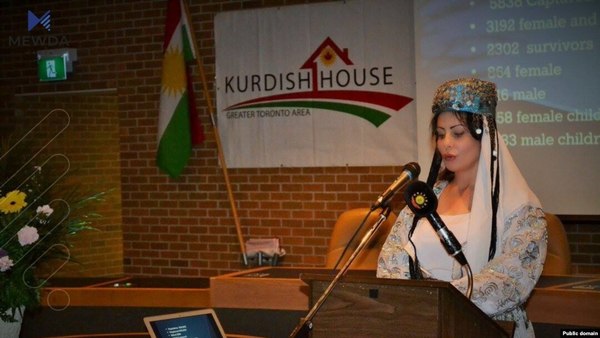
by a century of
genocides,
so that I could have belonged entirely to literature,
instead of using the vocabulary of war.
I always wish my nation had not been suffering,
So, I could have specialized in metaphor
instead of mass graves,
in the quiet labor of shaping characters
instead of documenting the architecture of annihilation.
There are thousands of stories waiting for me,
crowding the corridors of my mind,
women with luminous secrets,
Men have flowers in hand instead of weapons.
children who deserve to live inside novels
instead of footnotes to catastrophe.
Dozens of unfinished manuscripts breathe beneath my desk.
Hundreds of prose fragments flicker like distant constellations.
Beautiful words press against my soul,
urgent, tender, patient,
yet I cannot turn toward them,
because suffering is louder than lyric.
Every night before I sleep, I make the same promise to myself:
Tomorrow I will look for an agent for my completed novels.
Tomorrow I will return to that unfinished manuscript.
Tomorrow I will rescue those characters waiting in the dark.
After the last publication on genocide
and with the upcoming book on its way,
I had planned to take four years away
from genocide and war,
four years to breathe,
to publish what is already alive within me,
to complete the novels that have waited so long
for gentler times.
But I woke the next morning,
to the news of the Rojava genocide.
And once again,
history seized the pen from my hand.
Once again,
I was summoned back
to the language of fire.
That tomorrow never comes.
One day, I will no longer be here
to hear the breaking news,
to see the headlines bleed across the screen.
And no one will know
that I have been experiencing a genocide too,
the silent one,
the cowardly one,
the malicious, covert one,
that leaves no mass graves,
yet buries a life all the same.
For fifteen years
it has unfolded quietly,
not with bombs,
but with structural knives
wrapped in silk.
For refusing to step
under the umbrella
of the island’s dark patrons
and their small, glittering branches.
For refusing to betray my nation.
In my absence,
they will dare to say:
Some discarded soul from her own nation,
the one she defended,
helped us sharpen the knives.
Since early January 2026, al-Sharʿa has launched a mass killing campaign against the Kurds in the Rojava (Northeast Syria). Once again, without international backing, Syrian Democratic Forces commander Mazlum Abdi is being asked to continue the fight against a new form of ISIS while simultaneously negotiating with forces that many Syrians associate with past jihadist violence.
Kaziwa Salih
Ahmad al-Sharʿa, widely known as Abu Mohammad al-Julani, is now presented by some international actors as a political leader in Damascus following his rebranding from his former role as a commander of Jabhat al-Nusra, a group that was previously affiliated with al-Qaeda. While his political repositioning has been welcomed by some regional and Western diplomats claiming stability in Syria, many communities in northern Syria view this shift with deep alarm.
al-Sharʿa’s Achievements in Syria
Since his rise to power, Kurdish, Christian, and Druze communities are facing renewed threats from armed groups operating in areas now influenced by forces linked to al-Sharʿa’s networks. Since early January 2026, residents of Rojava, especially Aleppo, have reported widespread mass killing, targeted violence, and the collapse of local security. Local civil society organizations and human rights monitors have warned that these patterns resemble earlier campaigns of genocide and mass killing carried out by Islamic State in Iraq and Syria (ISIS) and jihadist groups during the height of the Syrian war.
In terms of the Arab‑Israel relationship, al‑Sharʿa publicly presents himself as favoring no new conflict and the maintenance of existing ceasefire agreements, a stance some observers interpret as pragmatic diplomacy. [1] Yet, the systematic targeting of Kurds in Aleppo and other minority communities, groups previously victimized by ISIS in 2014 and 2015, suggests that this diplomatic posture is largely performative. His actions indicate that strategic calculations, rather than ethical considerations, guide his approach to the peaceful administration of Syria.
In Iraq, Saddam Hussein’s 24-year rule was marked by six genocidal campaigns. In comparison, al‑Sharʿa, in less than a year of renewed territorial influence, has already committed four genocidal campaigns. Initially, his forces targeted the Allawi community. When international observers largely remained silent, his factions escalated violence against Christian communities. This pattern continued with the Druze, followed by renewed assaults on Kurdish populations with many aggressive measures. In these operations, al‑Sharʿa’s forces have employed brutality that, while extreme, appears calculated to exploit the perceived tolerance or procrastination of international actors.
These campaigns reveal that al‑Sharʿa has remained fully connected to the networks that emerged under ISIS. Within days of asserting control, he mobilized entire units to launch operations that echo ISIS-era methods. While international media often frame these actions as isolated or reactive, they are strategically motivated: Kurdish communities are targeted in Rojava not only because of their ethnic identity but also because of their democratic social structures, nonviolent stance toward Israel, and ideological independence from autocratic or jihadist frameworks. Similarly, Druze communities appear targeted in part due to historical and perceived ties with Israel.
The contrast between al‑Sharʿa’s public diplomacy and his operational record proves a fundamental gap between rhetoric and policy practice. His statements to U.S. officials and other international actors reflect pragmatic diplomacy aimed at maintaining external support or minimizing international intervention, rather than any substantive commitment to human rights or regional stability. In short, al‑Sharʿa’s diplomacy functions as a strategic veneer over a campaign of deliberate terrorist violence under different veils, an approach that has profound implications for U.S. and broader Western policy in the region.
North America’s Leadership: From a world free of terrorists to one led by terrorists.
Despite all the massive crimes, rather than confronting these terrorist actors directly, the US response has relied on light mediation, placing the Kurds in Rojava in the position of negotiating with forces they previously fought as part of the international coalition against ISIS. For many Syrians and Kurds, this constitutes a form of obligatory vulnerability: communities that survived years of jihadist violence and sacrificed thousands of martyrs are now expected to accept the same actors as legitimate political stakeholders. Otherwise, face the burden of another terrorist war alone.
In the current mass killings targeting Kurds, U.S. diplomacy frames both perpetrators and victims within the same neutralized framework, issuing statements calling for an “immediate ceasefire” [2] and saying “We urge all parties” as if the victims themselves were parties responsible for violence. In war and terrorist policies, this approach normalizes terrorist acts, erodes protections for minorities, and undermines the credibility of U.S. and broader North American leadership in upholding human rights, security, and regional stability. This statement can also be interpreted as a signal from Washington that Kurdish communities are expected not to defend themselves and instead accept the extermination of normalized SIS.
In diplomacy, it is referred to as conflict management and not conflict resolution. The purpose here is not to end the violence and hold anyone responsible, but instead, it is the prevention of instability from escalating in a manner that may potentially be damaging to the United States. In the Syrian case, this means prioritizing short-term stability, border control, and relations with Turkey and other regional partners over the security of Kurdish and other minority populations. This classic pragmatic strategy is associated with the extractive interventionism, in which the short-term geopolitical expansion is the main concern and not the stability. [2] This approach carries significant reputational costs and risks repeating the pattern of U.S. disengagement and loss of credibility witnessed in Afghanistan.
For decades, Washington has projected itself as a protector of minorities, a supporter of democracy, and the leader of the anti-terrorist and anti-ISIS coalition. Now, by treating ISIS-linked forces and Kurdish communities as morally equivalent parties, the U.S. is signaling to the world that its commitments are conditional and transactional. This causes allies to doubt the reliability of American protection, while encouraging adversaries to believe that violence can be rewarded if presented in diplomatic terms.
What Is at Stake for Canada’s Global Standing?
Canada has not singled out Rojava or the Kurdish administration for special military backing. Its emphasis has been on repatriation, humanitarian aid, and diplomatic engagement through support for UN-led political negotiation processes aimed at an inclusive resolution to the Syrian conflict, rather than military backing or strategic alliance.
Canadian lawmakers have occasionally voiced support for Kurdish political recognition. For example, on 27-8-2025, a Canadian Member of Parliament (not the government itself) said Ottawa would condition formal recognition of Syria’s new government on acknowledging Kurdish de facto authority in northeast Syria. [3] This reflects some indirect parliamentary support for Kurdish political legitimacy.
Regardless of their current internal political conflict, Canada and the United States are commonly perceived as a single strategic bloc in international diplomacy. This is due to their shared NATO membership, their joint role in the Global Coalition to Defeat ISIS, and their deep integration across Western policy frameworks. Both at the international and local level, for example, on Middle East policy, immigration and refugee regimes, and border security.
As a result, when Canada’s diplomatic position is stuck in either bystander or mirrors U.S. policy priorities, such as calls for “de-escalation” or support for broadly defined “inclusive political processes,” it is often interpreted internationally not as a distinct Canadian stance but as part of a coordinated North American approach, even when Canada’s actual engagement differs in scale or intensity from Washington’s.
The degradation of North American credibility does not remain a vacuum; it presents an opportunity that other powers, particularly Russia, are increasingly willing to fill.
From U.S. Retreat to Russian Advance
Russian diplomacy focuses on upholding its great power status and countering perceived Western hegemony, particularly U.S. dominance. To achieve its objectives, it often prioritizes national security interests, employing a combination of “coercive diplomacy,” which is power politics plus negotiations, with strategies like stalling and employing international law, and forging alliances with non-Western countries. [4] Since the past decade, Russia has proven its effectiveness in filling the international institutions and countries that failed to fulfill their roles.
In the Middle East, for example, it filled the UN Security Council when this institution was repeatedly paralyzed by vetoes from Russia and China, preventing binding action against Assad’s regime or ISIS-linked groups. In 2015, despite having been known in the region as the decisive actor by filling the “credibility vacuum,” Russia became the primary power broker in Syria, even as the UN failed to enforce its own resolutions. Now, through the Middle Eastern countries like Turkey and Egypt, it aims to lead the global nuclear energy sector.
In Africa, after NATO’s intervention removed Muammar Gaddafi, the former Libyan leader, the UN and Western institutions struggled to stabilize Libya, leaving the country fragmented between multiple militias and governments. Russia expanded its influence through arms deals, mercenary deployment (Wagner Group), and political support for one faction, positioning itself as a critical power player in Libya’s ongoing conflict.
In Europe, after international organizations such as the OSCE, the European Union, and NATO failed to deter Russian aggressive actions in the Crimean region in 2014 and in Ukraine. Economic sanctions were limited, and peace processes like Minsk I & II became ineffective. Russia expanded and solidified their territorial and influence gains in Eastern Ukraine, filling a vacuum of action by the international community that was too slow or ineffective in their multilateral efforts.
In instances where international institutions or Western powers fail to enforce standards, protect civilians, or stabilize conflict zones, Russia has consistently stepped into the resulting vacuum. Regardless of its current interests with Turkey, in the absence of effective American intervention, Moscow is likely to assert influence in Rojava and Syria more broadly—even if, as many in the Middle East describe, through deceptive means. This dynamic is particularly apparent in Aleppo, where reports indicate that many of the perpetrators in the current mass killings are Turkish nationals, including former ISIS and other jihadist fighters, who have been protected, trained, and explicitly supported by Turkey in coordination with al‑Sharʿa. It means the current force that kills civilians in Syria is not only Syrian forces but also the new form of ISIS created by Turkey and Qatar in coordination with al‑Sharʿa.
Collectively, these patterns reveal that the Kurds in Rojava, Syria, will not submit to a government that forms a terrorist force with international terrorist organization agents to kill its population and gives Turkey the chance to occupy Syria. On the other hand, the failures of North America, especially the US, and the uneven application of Western power not only leave crises unresolved but also actively shift the balance of global influence. Each time the credibility of North America diminishes, Russia not only wins space but also establishes itself as the guard of local security within regions where the West has failed.
Therefore, it is the responsibility of the United States, as a long-standing partners of the Kurds, to help establish an independent, safe zone in Rojava and ensure stability for the Syrian population. The Syrians, liberated from authoritarian rule, demand protection from terrorism and the right to live in peace.
يُعدّ كتاب The Palgrave Handbook of Kurdish Genocides أحد أبرز الإسهامات الأكاديمية المعاصرة في دراسة الإبادة الجماعية التي تعرّض لها الشعب الكردي، خاصة خلال القرن العشرين.
تحاول الباحثة كازيوه صالح من خلال هذا العمل الموسوعي أن تنقل النقاش من مستوى التوثيق السياسي إلى التحليل المعرفي والأنثروبولوجي، واضعةً الإبادة في سياقها التاريخي والاجتماعي والرمزي.
إنه كتاب يتجاوز الحكاية المأساوية نحو تفكيك بنية العنف ذاته — كيف يتشكّل؟ كيف يُبرَّر؟ وكيف يُعاد إنتاجه تحت مسميات جديدة في الدولة الحديثة؟
أهمية الكتاب:
يُعدّ كتاب «دليل بالغريف لإبادات الأكراد» بإشراف كازيوه صالح من أهم المراجع الأكاديمية الحديثة التي تتناول قضية الإبادة الكردية من منظور شامل ومتعدد التخصّصات. تكمن أهميته في كونه أول عمل موسوعي يجمع بين الدراسة التاريخية والسياسية والأنثروبولوجية والقانونية لتوثيق ما تعرّض له الشعب الكردي من جرائم ممنهجة عبر العقود.
لا يقتصر الكتاب على السرد التاريخي، بل يسعى إلى تحليل الجذور الفكرية والسياسية للعنف الموجّه ضد الأكراد، ويبرز تأثيراته الاجتماعية والثقافية العميقة على الهوية والذاكرة الجمعية. كما يقدّم مساهمات نوعية في مجالات العدالة الانتقالية وحقوق الإنسان والمساءلة الدولية، مما يجعله مصدرًا أساسيًا للباحثين وصنّاع القرار والمهتمين بفهم آليات الإبادة وسبل منع تكرارها.
إنه عمل لا يكتفي بتوثيق الألم، بل يدعو إلى الاعتراف والمصالحة وبناء مستقبل يقوم على العدالة والكرامة الإنسانية.
المحور الأول: الرؤية العامة والمنهج
العمل يقوم على مقاربة متعددة التخصّصات (Interdisciplinary)، حيث تلتقي دراسات التاريخ والسياسة وعلم الاجتماع والأنثروبولوجيا والقانون الدولي ضمن بناء معرفي متكامل.
ولا يكتفي الكتاب بتأريخ الوقائع، بل يسعى إلى تفكيك المنظومات التي أنتجت فكرة الإبادة، من الخطاب القومي والديني إلى البنية البيروقراطية للسلطة الحديثة.
كما يعتمد منهجًا مقارنًا يضع “الإبادة الكردية” في حوار نقدي مع حالات مثل الأرمن والبوسنة ورواندا، ليكشف أن منطق الإبادة ليس استثناءً في التاريخ، بل هو جزء من عقل الدولة الحديثة حين ترفض التعدد والاختلاف.
المحور الثاني: البنية التاريخية والسياسية
يستعيد القسم الأول جذور الإبادة في المسألة الكردية منذ انهيار الدولة العثمانية وصعود الدول القومية في الشرق الأوسط.
تُظهر الفصول أن العنف ضد الأكراد لم يكن وليد الحرب أو الصراع المسلّح فقط، بل هو نتاج مشروع سياسي متراكم يقوم على الإقصاء والإنكار، أي “نفي الوجود الثقافي والسياسي للكرد” بوصفه مقدّمة للعنف المادي.
في هذا السياق، تمثّل حملات الأنفال (1987–1988) ذروة هذا المسار، حين تحوّل الإنكار إلى سياسة منظمة للإبادة، استخدمت فيها أدوات الدولة الحديثة: الجيوش، القانون، الإعلام، والمبررات القومية.
المحور الثالث: الإبادة كحدث اجتماعي وثقافي
يتقدّم الكتاب خطوة أبعد من التحليل السياسي، حين يطرح سؤالًا محوريًا:
ماذا يحدث للمجتمع بعد الإبادة؟
تتناول كازيوه صالح وزملاؤها مفهوم “الإبادة الممتدة” (Extended Genocide) أي أن العنف لا ينتهي بانتهاء القتل، بل يستمر في الذاكرة، في اللغة، في بنية الوعي الجمعي.
فالمدارس التي تمحو اللغة الكردية، والخرائط التي تلغي القرى، والمناهج التي تُنكر الهوية، كلّها امتداد للعنف نفسه.
هنا يتداخل السوسيولوجي بالأنثروبولوجي، في تحليل العلاقة بين الذاكرة والهوية، وكيف تتحوّل الثقافة إلى مساحة مقاومة للإنكار.
المحور الرابع: العدالةالاعتراف
أحد أهم فصول الكتاب يناقش فشل العدالة الدولية في الاعتراف الكافي بالإبادة الكردية، وغياب الإرادة السياسية في معالجة آثارها.
يرى الكتاب أن الاعتراف ليس حدثًا قانونيًا فحسب، بل هو فعل أخلاقي ومعرفي؛ لأن الاعتراف بالحقيقة يعني مقاومة النسيان وإعادة الاعتبار للضحايا.
من خلال هذا المنظور، تتحوّل العدالة إلى مشروع ثقافي طويل المدى، يقوم على التعليم، التوثيق، وإعادة بناء الخطاب العام حول الإبادة.
المحور الخامس: ما بعد الإبادة – الهوية والمستقبل
يختتم الكتاب بقراءة في تحولات الهوية الكردية المعاصرة بعد المأساة.
يرى أن الإبادة، رغم فظاعتها، ساهمت paradoxically في تعزيز الوعي الجمعي الكردي بضرورة الوجود، والحفاظ على الذاكرة كفعل مقاومة.
كما يتناول أثر الشتات والمنفى في تشكيل سرديات جديدة للانتماء، تفتح المجال أمام ثقافة سلام لا تنكر الجرح، بل تبني عليه وعياً إنسانياً جديداً.
التحليل النقدي:
من الناحية الأكاديمية، يمتاز الكتاب بثلاث نقاط أساسية:
1. الموسوعية: جمع عدد كبير من الباحثين من خلفيات مختلفة لتكوين رؤية شاملة.
2. العمق التحليلي: الانتقال من “السرد” إلى “البنية” — من الحدث إلى نظام العنف الذي صنعه.
3. البعد الإنساني: الحضور القوي لشهادات الناجين وأصوات الضحايا يمنح النص بعداً وجودياً لا يمكن اختزاله في الأرقام.
أما من زاوية النقد، فقد يُلاحظ أن التنوّع المنهجي جعل بعض الفصول متباينة في الأسلوب والاتجاه الفكري، وأن الكتاب لا يقدّم نموذجًا موحدًا للتأريخ بقدر ما يفتح المجال لحوار أكاديمي مفتوح حول مفهوم الإبادة.
الخاتمة:
يشكّل The Palgrave Handbook of Kurdish Genocides منعطفًا معرفيًا في دراسات الإبادة، لأنه ينقل مأساة الأكراد من الهامش الإنساني إلى مركز النقاش الأكاديمي العالمي.
إنه ليس كتابًا عن الماضي فقط، بل عن ذاكرة لم تكتمل بعد — ذاكرة تستدعي التفكير في معنى العدالة، وفي إمكان بناء مستقبل يرفض التكرار.
يذكّرنا هذا العمل بأن دراسة الإبادة ليست بحثًا في الموت، بل في كيفيّة إعادة إحياء الذاكرة كي لا يُعاد إنتاج القتل من جديد. القيمة العلمية للكتاب:
أوّل عمل شامل باللغة الإنكليزية يغطّي الإبادات ضد الأكراد من القرن العشرين حتى اليوم.
يجمع بين الدراسات الأكاديمية والشهادات الشخصية، ما يمنحه عمقًا إنسانيًا. يعدّ مرجعًا ضروريًا في مجالات: دراسات الإبادة، الشرق الأوسط، حقوق الإنسان، دراسات الذاكرة الثقافية